Showing posts with label #photosafari. Show all posts

Friday, 3 May 2013

Goodbye Tanzania... Hello Provence...


The latest workshop in Tanzania is coming to a close. We finally flew out of the Serengeti and landed at the Kilimanjaro airport, memories stored forever in my mind, thousands of photos taken and new friendships developed.

Africa is a wonderful experience, one every photographer should do. Its not only to photograph some amazing animals, but to capture the essence of the people and the breath taking landscapes.

But before you go, talk to photographers that have done it... there as some tourist traps, pitfalls and some information you should know before you go, not to mention the hidden costs of travelling here... If you have any questions, please feel free to reach out to me and ask. I would be happy to share my experience and give you some tips.

Over the next week I will post some tips for taking an African safari and announce the details for my next safari to Namibia and to Tanzania next year.... and yes, some photos. I have thousands of photos that I have not posted yet as I want to wait to get home on my PC to do some editing.

From here I go home and prepare for my next workshop in Provence in June...

Sitting at the outside bar at the KIA Lodge, beer in my hand, laptop in front of me,

Kev


Sunday, 28 April 2013

Capturing emotion and motion

One of the things everyone wants to capture when on safari is an iconic chase or one of the big five running.

While sitting in the safari vehicle waiting for it to happen I decided I would write about capturing emotion, and motion... tips that can apply to any photography situation, not just while on an African Safari.

Capturing Emotion and Feeling
photo taken with a Nikon D7000 and a Sigma 150-500mm

A good photograph stirs up emotions. From your child in the middle of a good laugh with a friend to a feeling of horror over an image of carnage, photographs should make the viewer feel something strongly.

Before you release your shutter, ask yourself what emotion you want your image to evoke. The feeling of amazement at the beauty before you? Do you want to pull at a persons heart strings and photograph mother and child in a moment of tenderness?

Identify with that feeling before you shoot, capture the scene with as many photographs as you can to give you options and your photographs will likely improve.

Capturing Motion
photo taken with a Nikon D7000 and a Sigma 150-500mm

When it comes to motion you have two ways to go... stop the motion or show the motion. If you want to stop the motion you need higher shutter speeds to freeze the moving object. The problem comes when people freeze the motion and then place the subject dead center... it becomes questionable whether the subject was motionless or in full stride.

The tricks with freezing motion are two things... (1) placement of subject and (2) position in which the subject was frozen by the camera. Use a trick to place the subject to one side of the frame and use negative space in front of the moving subject... give the subject room to move inside the photo borders.

If you want to show motion try to slow down the shutter speed a little and pan with the moving subject... If you keep the camera moving with the subject you will keep some of the subject in focus and some with motion blur... when photographing an animal... keep the camera on the head or front shoulders while you pan and the legs and background will be somewhat blurred.

Friday, 4 January 2013

The Serengeti weather in April

ONE SPOT LEFT FOR OUR PHOTO SAFARI IN TANZANIA
 

Many people have shown interest in coming to Africa with Rick Sammon and I but are worried when they hear “Green Season”… well, I did significant research on the weather and the following is an over view of the months of April and May in the areas we will be visiting.

Yes there is a chance of heavy rain during April and lighter showers can also be expected for a few hours every day or every other day. However, when it does rain, it will usually clear in 1-2 hours and more then likely the rain will be localized versus mass rain over a large geographical area like we receive in North America. It is rare that rain clouds will settle over a large area for an extended period of time. We are headed to the Serengeti and the highest amounts of precipitation are historically seen in April for most parts of East Africa and not in the Serengeti region we will be in. The greatest amounts of precipitation are historically recorded in March in the Southern Serengeti, long before we will be there. This is the season of the so-called ‘long rains’, which simply does not mean much of anything in the Serengeti and is more applicable to other areas in East Area. Additionally, it is generally believed the month April offers the finest game viewing opportunities out of the entire year.


Rain falls in different amounts over various locations throughout Northern Tanzania. The Tarangire and Lake Manyara areas receive higher rainfall then many areas of the Serengeti. There is a steep rainfall gradient in the Serengeti from the dry southeast to the wet northwest. The Ngorongoro Highlands block much of the rain from reaching the eastern and southern plains of the Serengeti. However, the western and northern parts of the Serengeti receive a much greater amount (2-3 times more) of precipation as compared to the southern and eastern Serengeti where we will be. The wetter western and northern Serengeti areas are affected by Lake Victoria. This causes high rain fall amounts, but will be far from us.

Temperatures are pleasant with an average high of 83 degrees and an average low of 60 degrees. However, the rim of the Ngorongoro Crater can get quite cold at night and in the early morning. Visitor numbers drop off dramatically at the beginning of March and by April the parks are completely empty of local tourists. April and May see the fewest visitors of any month and lodging costs are substantially reduced. There is hardly anyone around in the parks, wildlife concentrations are at their highest in the Southern Serengeti, and the landscape is a lush green. April is certainly one of the best times to take a safari!

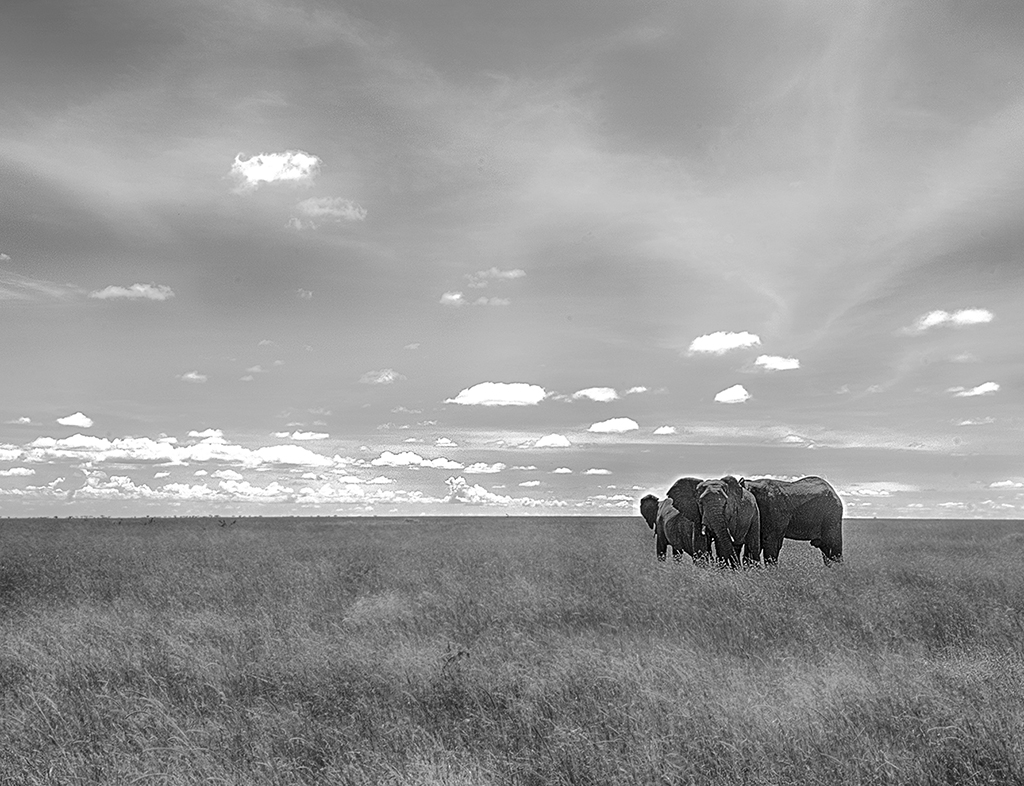
For the photographer, April represents one of the only times of year that offer interesting skies and front row viewing of all the wild life. You simply do not have to jockey for position for optimal lighting like you have to in the dry season.

If you want to join Rick and I please check out the workshop in the Serengeti here… http://www.photographers-lounge.com/photo-tours/our-2013-photo-tours/tanzania-photo-tour , and if you have been on one of our workshops before contact us to discuss the “Friends of Rick” deal…

I look forward to seeing you in Africa,
Kev